

Hey there, audio enthusiasts! I'm a supplier of 3D sound diffusers, and today I'm gonna dive into the nitty - gritty of the frequency range of these amazing devices.
First off, let's quickly understand what a 3D sound diffuser is. It's not just some random piece of equipment. A 3D Sound Diffuser is a high - tech acoustic tool designed to scatter sound waves in a room. Instead of having sound bounce off walls in a chaotic or concentrated way, a diffuser spreads the sound evenly throughout the space. This helps in creating a more natural and immersive audio environment, whether you're in a recording studio, a home theater, or a concert hall.
Now, onto the main topic: the frequency range. The frequency range of a 3D sound diffuser can vary quite a bit, and it depends on several factors.
Low - Frequency Range
In the low - frequency spectrum, typically from about 20 Hz to 200 Hz, things get a bit tricky. Most 3D sound diffusers aren't super effective at these frequencies. Here's why. Low - frequency sound waves have long wavelengths. For example, a 20 Hz sound wave has a wavelength of around 17 meters! These long wavelengths are hard to manipulate with the structures of a typical 3D diffuser.
However, some high - end Solid Wood Diffuser models can have a bit of an impact in the lower frequencies. Solid wood has certain acoustic properties that can help in slightly scattering these long - wavelength sounds. But don't expect a diffuser to completely transform the low - frequency response in a room. Usually, for proper low - frequency management, you'll also need bass traps and other specialized equipment.
Mid - Frequency Range
The mid - frequency range, which is roughly from 200 Hz to 2 kHz, is where 3D sound diffusers really shine. This is the range where most of the important audio information lies, like the vocals in a song or the dialogues in a movie.

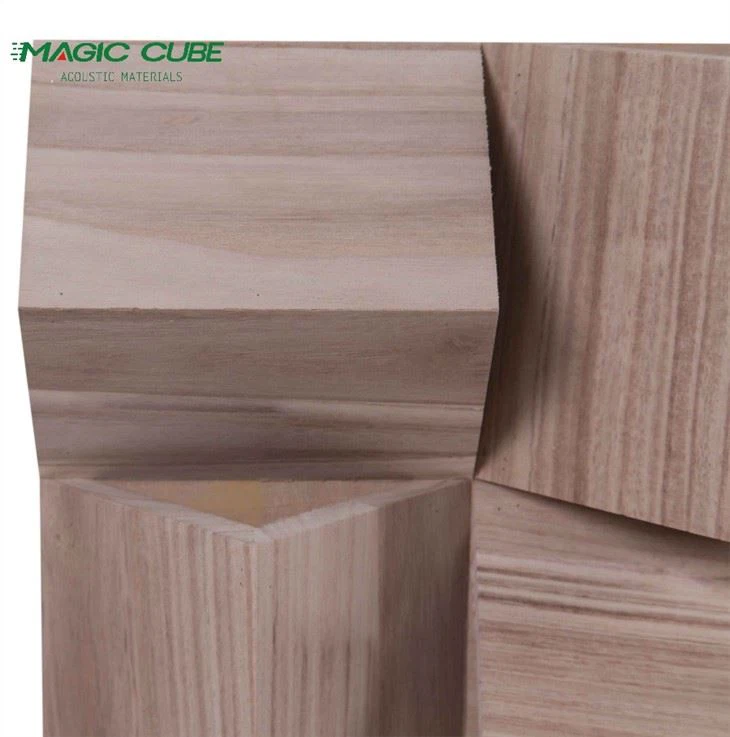
In this range, the wavelengths of the sound waves are more manageable for the diffuser's structures. The 3D design of the diffuser can break up the sound waves in a controlled manner and spread them out evenly in the room. This reduces the harsh reflections that can cause auditory fatigue and make the sound seem muddled. When you have a well - designed 3D diffuser in this frequency range, you'll notice a significant improvement in the clarity and spaciousness of the sound.
High - Frequency Range
Moving on to the high - frequency range, from 2 kHz to 20 kHz, 3D sound diffusers are also very effective. High - frequency sound waves have short wavelengths, and the complex geometries of a 3D diffuser can easily interact with them.
These short - wavelength sounds are responsible for adding details and airiness to the audio. Without proper diffusion, high - frequency reflections can create a "hissy" or "tinny" sound. A good 3D diffuser scatters these high - frequency waves, making the sound more natural and less harsh. It also helps in creating a more immersive surround - sound experience.
Factors Affecting the Frequency Range
There are a few factors that can affect the frequency range of a 3D sound diffuser.
1. Design and Geometry: The shape and structure of the diffuser play a huge role. Different designs are optimized for different frequency ranges. For example, a diffuser with deep and wide wells might be better at handling mid - frequencies, while a more intricate, fine - detailed design could be more effective for high frequencies.
2. Material: The material used to make the diffuser also matters. As I mentioned earlier, solid wood can have a unique impact on the low - frequency range. Other materials like fiberglass or plastic can have different acoustic properties and can affect how the diffuser performs across the frequency spectrum.
3. Size of the Diffuser: A larger diffuser might be able to handle lower frequencies better than a smaller one. This is because the size of the diffuser needs to be comparable to the wavelength of the sound waves it's trying to diffuse.
Why the Frequency Range Matters
Understanding the frequency range of a 3D sound diffuser is crucial for anyone who wants to optimize their audio environment.
If you're a musician or a producer in a recording studio, knowing the frequency range helps you choose the right diffusers to get the best sound quality for your recordings. You can place diffusers strategically based on where you need the most improvement in the frequency spectrum.
For home theater enthusiasts, it means creating a more realistic and immersive experience. By using diffusers that are effective in the relevant frequency ranges, you can make your movie nights feel like you're in a real cinema.
Combining with Sound Absorbers
It's also important to note that 3D sound diffusers are often used in combination with Diffuser Sound Absorber. Sound absorbers are used to reduce the overall level of sound reflections in a room, while diffusers scatter the remaining sound waves to create a more natural sound field.
In a well - balanced acoustic setup, you might use sound absorbers in areas where you want to cut down on excessive reflections, like behind the listening position. And then, place 3D diffusers on the side walls or ceiling to add the necessary diffusion and spaciousness to the sound.
Conclusion
So, there you have it, a breakdown of the frequency range of a 3D sound diffuser. It's clear that these devices are extremely useful across different frequency spectra, although their effectiveness varies.
If you're looking to enhance your audio environment, whether it's for a professional studio or a home setup, investing in high - quality 3D sound diffusers is a great idea. And as a supplier, I'm here to help you choose the right diffusers for your specific needs. Whether you're dealing with a small home theater or a large concert hall, I can provide you with the best solutions to get the perfect sound.
If you're interested in learning more or making a purchase, feel free to reach out. We can have a detailed discussion about your requirements and find the ideal 3D sound diffusers for your space. Let's work together to take your audio experience to the next level!
References
- Beranek, Leo L. "Acoustics." American Institute of Physics, 1954.
- Everest, F. Alton. "Master Handbook of Acoustics." McGraw - Hill Education, 2001.
- Barron, M. R. "Building Acoustics." Taylor & Francis, 2009.