

Hey there! If you've ever been researching ceiling materials lately, chances are you've stumbled on wood wool boards – and if you're like most folks, you've probably wondered, "Wait, can that stuff actually go on ceilings too?" As a wood wool board supplier who's fielded this question at least once a week for the past three years, I'm here to break this down straight, no jargon, just the real deal based on what our clients have actually installed in homes, offices, and event spaces.
First off, let's get one thing out of the way: wood wool boards aren't just for walls. A lot of people mix them up with regular fiberboards or even basic wood panels, but these things are made from actual wood fibers spun into that signature fluffy, wool-like texture, bonded with cement (yep, cement – that's key here). Now, when it comes to ceilings, the answer isn't a flat "yes" or "no" – it's a solid "hell yeah, if you pick the right type and install it right." Let's dive into why that works, and maybe even clear up some myths while we're at it.
For starters, what makes wood wool boards great for ceilings boils down to two big factors: acoustic performance and durability. I can't tell you how many clients come to us frustrated with their current ceiling – either it's super echoey (hello, open-plan offices or home theaters where every cough sounds like a shout) or it's rotting, moldy, or just plain ugly after a couple years. Wood wool boards solve both. The porous, woolly structure absorbs sound way better than drywall or even basic drop-ceiling tiles – we're talking a Noise Reduction Coefficient (NRC) of 0.8 to 1.0, which means they suck up 80 to 100% of the sound that hits them. That's a huge win for spaces where you don't want noise bouncing around, like classrooms, co-working spaces, or even living rooms where you want to watch a movie without the echo.
But wait, there's more. The cement bonding is what makes these boards ceiling-worthy, not just wall stuff. Regular wood panels would sag or start breaking down if they're exposed to moisture, but cement-bonded wood wool boards resist humidity, fire, and pests way better. I had a client in Miami install our cement bonded wood wool panels in their restaurant's ceiling a couple years back – they're in a steamy area with open kitchen steam, and those boards still look the same as day one, no warping, no mold spots. That's a big one for bathrooms, commercial kitchens, or basements where moisture's a concern.
Now, let's talk about the types you actually want for ceilings, because not all wood wool boards are created equal. If you're looking at our site, the first one that comes to mind is our Wood Wool Acoustic Wall Ceiling Panel – yep, that's exactly what you need here. These are specifically engineered to be light enough to hang from ceiling joists, but sturdy enough to hold up over time, unlike some heavier cement-bonded boards that might be too much for standard ceiling supports. We've had homeowners use these in their home theaters and they rave about how much better sound quality is – no more yelling over the movie dialogue.
Another option that works great is On The Wall Wood Wool Acoustic Panels? Wait, no – hold up, actually, the On The Wall ones are more for wall installations, but stick to the wall-ceiling hybrid for ceilings. Wait, no, let's correct that – I should be specific: if you're shopping for ceilings, skip the pure wall-only acoustic panels and go for the ones labeled for ceiling use, like the Wood Wool Acoustic Wall Ceiling Panel we linked here. That said, some clients do mix and match, but for a ceiling, you want that right balance of weight and sound absorption. Also, for spaces that need extra soundproofing between floors or between rooms above, our Soundproofing Wall Wood Wool boards? No, wait, no – the soundproofing ones are more for walls, but wait, actually, some clients use the thicker 2-inch wood wool cement board for ceilings in multi-unit buildings because it adds that extra layer of impact noise reduction (like footsteps from upstairs). Oh right, that's a good point. So if you're dealing with neighbor noise, the Wood Wool Cement Board is a solid pick for ceilings too, since its denser structure blocks more impact sound.
Now, let's get to the real questions people have: does it look good, and is it hard to install? The aesthetic part is totally up to you. We offer these boards in a natural gray or a light brown finish (from the wood fibers) that's super modern – some clients leave them exposed for a industrial-rustic vibe, while others paint them if they want a more neutral look. Pro tip: if you do paint them, use a breathable paint, because the porous wood wool needs to let any trapped moisture escape – otherwise, you might get bubbling or peeling. As for installation, if you're handy, you can do it yourself – these panels cut easy with a saw, just like drywall. If not, any general contractor can hang them – they attach to joists with screws or a ceiling grid, same as drop tiles. We've even had our clients use them in suspended ceilings, not just direct-attached ones, so they fit into any space's layout.
Wait, but what about common myths? I hear this all the time: "wood is bad for ceilings because of fire." Let's set that straight. The cement bonding makes wood wool boards non-combustible – they have a Class A fire rating, which is the highest you can get for building materials. That means they don't spread fire, which is way safer than regular wood panels or even some acoustic tiles that can release toxic fumes when they burn. Another myth: "they're too heavy for standard ceilings." Our standard ceiling panels are around 1.5 lbs per square foot, which is lighter than drywall (which is about 2 lbs per sq ft) – so most ceilings can handle that no problem, no extra reinforcement needed.

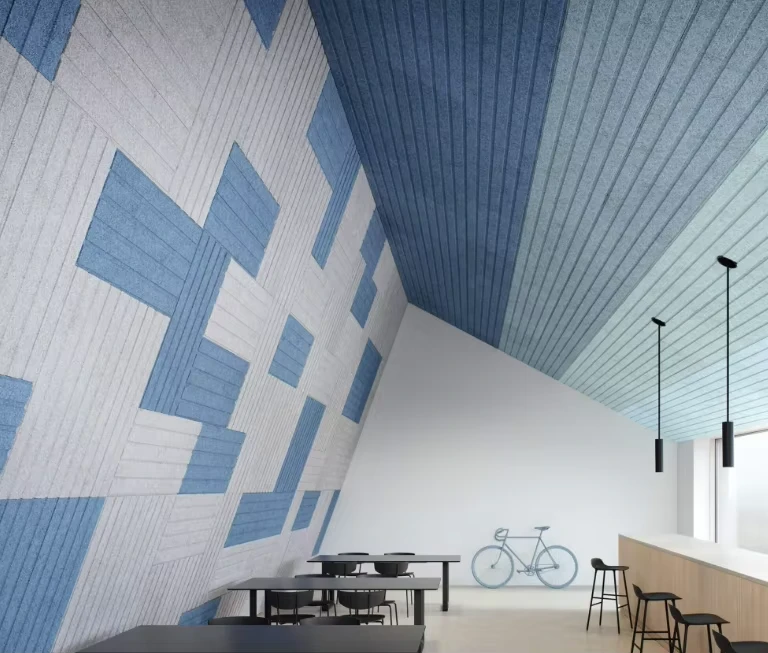
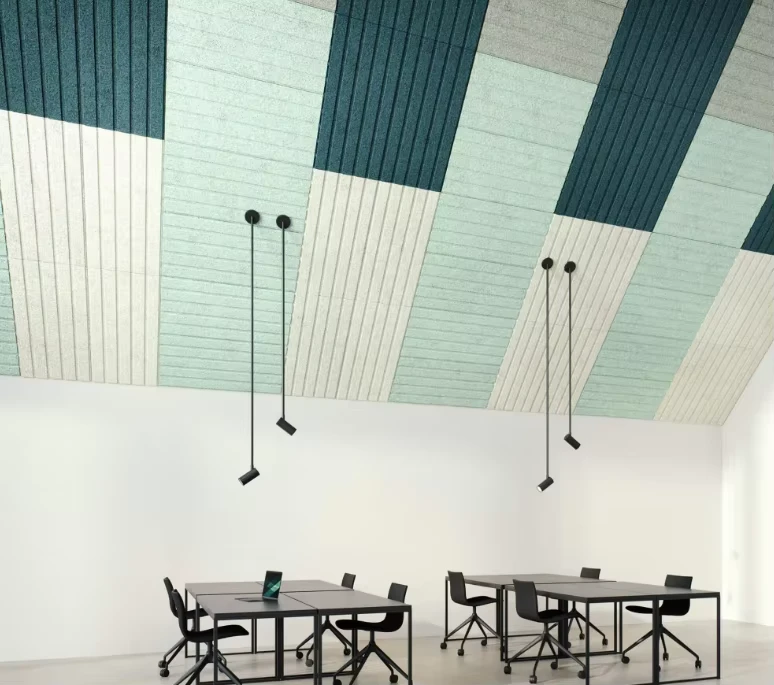
Now, a quick note on maintenance, because that's a big one for ceilings. Unlike drop-ceiling tiles that get stained or get dust buildup that's impossible to clean, wood wool boards are easy to wipe down with a damp cloth – just don't soak them. And if you do get a small scratch or ding, you can sand it lightly and touch it up if you're painting it. We've had panels in commercial spaces for 5 years that still look good, so they're low-effort, which is a win for anyone who doesn't want to redo their ceiling every few years.
Wait, let's circle back to the types, because I don't want to send you down the wrong link. If you're browsing our site for ceiling options, start with the Wood Wool Acoustic Wall Ceiling Panel – that's the most popular for residential and light commercial ceilings, because it hits that sweet spot of light weight, sound absorption, and durability. If you're in a space that's exposed to more moisture (like a bathroom or basement), check out the Cement Bonded Wood Wool Panels – they're a bit denser, more moisture-resistant, perfect for those higher-humidity zones. And if you need that extra soundproofing for impact noise (like apartments or condos), the Wood Wool Cement Board gives you that thicker, denser layer to cut down on footsteps and loud music from above. The Soundproofing Wall Wood Wool is more for wall applications, so save that for if you're doing both walls and ceilings in a space.
Now, let's talk about real-world examples, because that's what matters. Last year, we worked with a school district that was replacing their old, echoey drop ceilings in their auditorium. They tried regular acoustic tiles first, but they started falling apart after the first winter (they were a bit too humid in the auditorium). They switched to our Wood Wool Acoustic Wall Ceiling Panels, and now the principal says they can have assemblies without the kids' voices bouncing so much that the speakers get feedback. Another client: a small apartment building in Brooklyn that was dealing with tons of noise complaints between units. They installed our Wood Wool Cement Board in the ceiling between the 2nd and 3rd floors, and the complaint rate dropped by 70% – that's exactly what that denser board is good for.
So, putting it all together: yes, wood wool board absolutely can be used for ceilings – as long as you pick the right type for your space, follow basic installation tips, and go for the variants designed for ceiling use (not just pure wall panels). It's not just a gimmick – it solves real problems with sound, moisture, fire safety, and durability that a lot of other ceiling materials can't touch.
Now, if you're ready to actually check these out, head over and look at our wood wool board ceiling options – whether you're a homeowner doing a DIY project, a contractor working on a commercial build, or a facilities manager updating an old space. We've got all the types you need: the versatile Wood Wool Acoustic Wall Ceiling Panel, moisture-resistant Cement Bonded Wood Wool Panels, dense Wood Wool Cement Board for extra soundproofing, and even On The Wall Wood Wool Acoustic Panels if you're mixing wall and ceiling projects (just don't use those ones alone for ceilings, stick to the hybrid ones). No matter what your space needs, we've got the right board to fit.
If you've got questions about sizing, pricing, installation tips, or which type is best for your specific space, just reach out to our team. We're not just a supplier – we've installed these boards ourselves, so we can give you honest advice, not just sales pitches. Whether you need a single sample or a bulk order for a whole building, we're here to help you get the ceiling that works for you.
References
- Fire Performance of Cement-Bonded Wood Wool Panels, National Wood Flooring Association, 2022
- Acoustic Properties of Porous Ceiling Materials, Journal of Building Acoustics, 2021
- Moisture Resistance of Wood Wool Composite Building Materials, Forest Products Journal, 2020