

If you've ever sat through a conference room call where the person on the other end sounds like they're talking in a tin can, or your team's in-room presentation got muddled by echo, you know how frustrating bad acoustics can be. As a QRD sound diffuser supplier, I get asked this question all the time: can QRD sound diffusers actually work in conference rooms? The short answer is yes-but it's not just slapping a diffuser on a wall and calling it good. Let's break this down, mix in some real-world context, and be honest about what works (and what doesn't) for office meeting spaces.
First, let's cover the basics of why conference rooms struggle with acoustics in the first place. Most conference rooms are boxy, right? They have hard, flat surfaces-drywall, glass, laminate tables-that don't absorb or scatter sound well. When someone speaks, sound waves bounce straight off those surfaces, creating echo (that hollow, "what did you say?" effect) and standing waves. Standing waves are those dead zones where sound just kind of hangs in the air, so half the room hears a speaker clearly and the other half can't make out words at all. Worse, too much reverberation (sound bouncing multiple times) makes it hard to follow conversations in big rooms, or to hear video calls when the echo bleeds into mics.
QRD, or Quadratic Residue Diffusers, are a type of acoustic panel designed specifically to scatter sound waves evenly across different frequencies, instead of absorbing them like foam or fiberglass. Unlike basic diffusion panels that just bounce sound in random directions, QRDs use a mathematical formula to create a grid of deep grooves (each groove is a specific depth) that breaks sound into hundreds of tiny, non-synchronous reflections. That sounds fancy, but what it actually means is: no more echoey sound bouncing straight back at a speaker, no more dead spots, and sound gets distributed evenly around the room.
Now, back to the big question: do they fit in conference rooms? Let's start with what they do well, then talk about where you have to be careful.
First, QRDs are way better than plain absorbers at keeping speech clarity for large groups. Wait, hold up-there's a common misconception here: some people think acoustic treatments are either absorbers or diffusers, and you have to pick one. But conference rooms actually need a mix, not just one or the other. Absorbers (like the ones that soak up sound energy) are great for cutting down bass booms or too much reverb, but QRD diffusers handle mid and high frequencies better. Mid-high frequencies are where speech clarity lives-most consonants (like s, t, p) fall in that range, so scattering those evenly keeps everyone hearing words clearly, even if they're standing in a corner of the room.
I've worked with a ton of startup teams and small business owners who tried only absorbers in their conference rooms, and they'd still complain about echo during Zoom calls. Why? Absorbers only work in the frequencies they're rated for. If you're relying solely on absorption, you can end up with "muddy" sound because some frequencies are too damped, while others still bounce around. QRDs fix that because they scatter across a broad frequency range, so you don't have to overdo absorption and kill the natural, conversational sound of the room.
Another win for QRDs in conference rooms: they don't look like ugly add-ons. A lot of acoustic panels are just plain gray foam, which sticks out like a sore thumb in a modern office. Our QRD diffusers come in wood finishes (you can check out our Wooden Sound Diffuser options) that blend right into drywall, or even match your office furniture. For conference rooms that double as presentation spaces, you can even get custom wood finishes that complement branding-no more treating your room like a recording studio.
Wait, but let's talk about where QRDs might not be the first choice. If your conference room is super small-like a 10x10 room for 2-3 people-you might not need them. Small rooms have shorter sound paths, so echo is less of an issue, and absorbers usually work just fine. But for rooms that fit 6+ people, or have high ceilings (10 feet or more), QRDs start to make a huge difference. High ceilings let sound travel further before it bounces back, so scattering that sound instead of absorbing it keeps the room feeling open, not closed in.
Also, placement matters. You can't just stick a QRD on a wall anywhere and expect results. The sweet spots are the first reflection points-those spots on the walls (or ceiling) where sound from a speaker's mouth would bounce directly into a listener's ear. If you put a diffuser on one of those points, it scatters the sound before it can create echo for the whole room. I always tell customers to measure: for a standard 8-foot ceiling, the first reflection point is about 4 feet up from the floor on the side walls, halfway between the speaker and the listener. Skip that spot, and the diffuser's impact drops by 50% or more.
Let's talk about a recent example: a marketing agency in Chicago reached out to me last quarter. Their main conference room was 15x20 feet, with glass walls (huge sound bouncers) and a long table in the middle. Before, during client calls, their team would have to huddle close to the speakerphone, and even then, clients would complain about echo. We installed 6 of our Wood Acoustic Diffuser panels on the side walls (all at first reflection points) plus a small amount of absorption on the back wall (to cut down on bass reverb). A month later, their office manager told me clients stopped mentioning echo, and internal presentations felt way more smooth-no more people missing lines because sound was bouncing oddly. That's the kind of win I love to see.
Another thing to note: QRDs aren't just for speech. If your conference room does presentations with video or music (like product demos), they help keep those sounds balanced too. Absorbers can muffle music, making demos feel flat, but QRDs spread sound evenly so the whole room hears a clear, consistent tone, not just the people near the speaker.
Wait, but let's address the other side: is there a case where QRDs are a bad call? If your room already has way too much low-end reverb (like if you have concrete floors and a concrete ceiling), you'll need more absorption than diffusion there. That's where mixing treatments comes in: add some Diffuser Sound Absorber panels-they're hybrid units that do both, so you get the best of both worlds without cluttering the room. No need to pick one or the other when you can combine.
Also, budget might be a factor for some teams. Wood QRDs are a bit pricier than basic foam absorbers, but they last way longer and do double duty (acoustics and decor). Plus, if you pick the right size, you don't need as many of them as you think. A single 2x4 QRD panel can cover a large first reflection point, so you don't have to fill every wall. For smaller conference rooms, even 2-3 panels can make a noticeable difference.
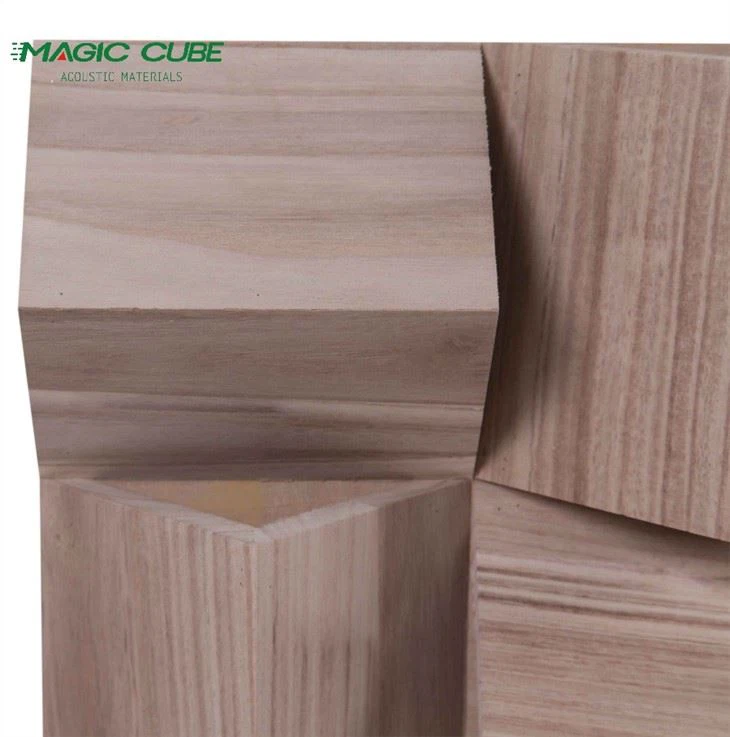

I get a lot of questions about polyester diffusers too-they're a great option if you want something lighter, maybe for a temporary setup? Wait, no, polyester is usually for absorbers, but wait we do have Polyester Acoustic Sound Diffuser for budget-conscious spaces or rooms where wood might not match. They're not as durable as wood, but they work just as well for basic diffusion if your conference room is on a tight budget.
Let's wrap this up with a quick reality check: QRD sound diffusers aren't a magic fix for bad conference room acoustics. They work best when paired with the right amount of absorption, placed in the right spots, and sized for your room. But when you get that combination right? They turn a room where calls are stressful and presentations are muddled into a space where everyone can hear clearly, no huddling required.
If you're thinking about upgrading your conference room acoustics, don't overcomplicate it. Start by measuring your room size, noting what surfaces are hard (glass, drywall, laminate) vs soft (carpet, fabric). Then, reach out if you want help picking the right panels-whether that's our Wood Acoustic Diffuser Panel for a polished look, or hybrid units if your room needs more than just diffusion. Don't guess at treatments-get something that works for your space, not just a one-size-fits-all fix.
References:
- Meyer, E. (2009). Acoustics and the Performance of Music (5th ed.). Springer.
- Cox, T. J., & D'Antonio, P. (2015). Acoustic Diffusers: Theory and Practice. CRC Press.
- American National Standards Institute. (2018). ANSI/ASA S12.60-2018: Acoustics in Conference Rooms.
- Beranek, L. L. (2004). Concert Halls and Opera Houses: Music, Acoustics, and Architecture (2nd ed.). Springer.