

Hey there! As a supplier of Solid Wood Diffusers, I've been getting a lot of questions lately about how the grain of the wood affects the diffusion of these awesome products. So, I thought I'd take a deep dive into this topic and share what I've learned.
First off, let's talk about what a solid wood diffuser is. A Solid Wood Diffuser is a type of acoustic device that helps to scatter sound waves in a room. This is super important for creating a more balanced and natural sound environment, whether it's in a recording studio, a home theater, or a concert hall.
Now, the grain of the wood plays a crucial role in how the diffuser works. Wood is a natural material, and its grain structure can vary widely depending on the species of the tree, the part of the tree the wood comes from, and how it's been processed.
The grain of the wood can affect the diffusion of sound in a few different ways. One of the main factors is the density of the wood. Wood with a tight, straight grain tends to be denser than wood with a loose, irregular grain. Denser wood can absorb and reflect sound waves more effectively, which can lead to better diffusion.
For example, if you have a solid wood diffuser made from a species like oak, which has a relatively tight and straight grain, it's likely to provide more consistent and efficient diffusion compared to a diffuser made from a softer wood with a looser grain, like pine.
Another way the grain affects diffusion is through its direction. When the grain of the wood is oriented in a certain way, it can influence how sound waves interact with the surface of the diffuser. If the grain is running parallel to the direction of the sound waves, it can cause the waves to travel more smoothly along the surface, which can enhance diffusion. On the other hand, if the grain is perpendicular to the sound waves, it can cause more scattering and reflection, which might not be as desirable in some situations.
Let's take a look at how different types of wood grains can impact the performance of a solid wood diffuser.
Straight Grain
Wood with a straight grain is often considered ideal for solid wood diffusers. It provides a consistent surface for sound waves to interact with, which can result in more predictable and uniform diffusion. The straight grain also helps to maintain the structural integrity of the diffuser, making it less likely to warp or crack over time.
For instance, maple is a popular choice for solid wood diffusers because of its straight and fine grain. It offers good density and a smooth surface, which allows sound waves to be scattered evenly.
Curly Grain
Curly grain is characterized by a wavy or swirling pattern in the wood. This type of grain can add an interesting aesthetic element to the diffuser, but it can also have an impact on its acoustic performance. The irregular shape of the curly grain can cause sound waves to scatter in different directions, which can create a more complex and diffuse sound field.
However, it's important to note that the effect of curly grain on diffusion can be a bit more unpredictable compared to straight grain. In some cases, it might be beneficial for creating a more natural and immersive sound environment, but in others, it could lead to unwanted reflections or uneven diffusion.
Interlocked Grain
Interlocked grain occurs when the fibers of the wood twist and turn in different directions. This type of grain can make the wood more difficult to work with, but it can also have some unique acoustic properties. Interlocked grain can cause sound waves to bounce around in a more random way, which can help to break up standing waves and reduce echoes in a room.
Some tropical hardwoods, like teak, often have interlocked grain. While teak is more commonly known for its durability and water resistance, its interlocked grain can also contribute to the diffusion capabilities of a solid wood diffuser.

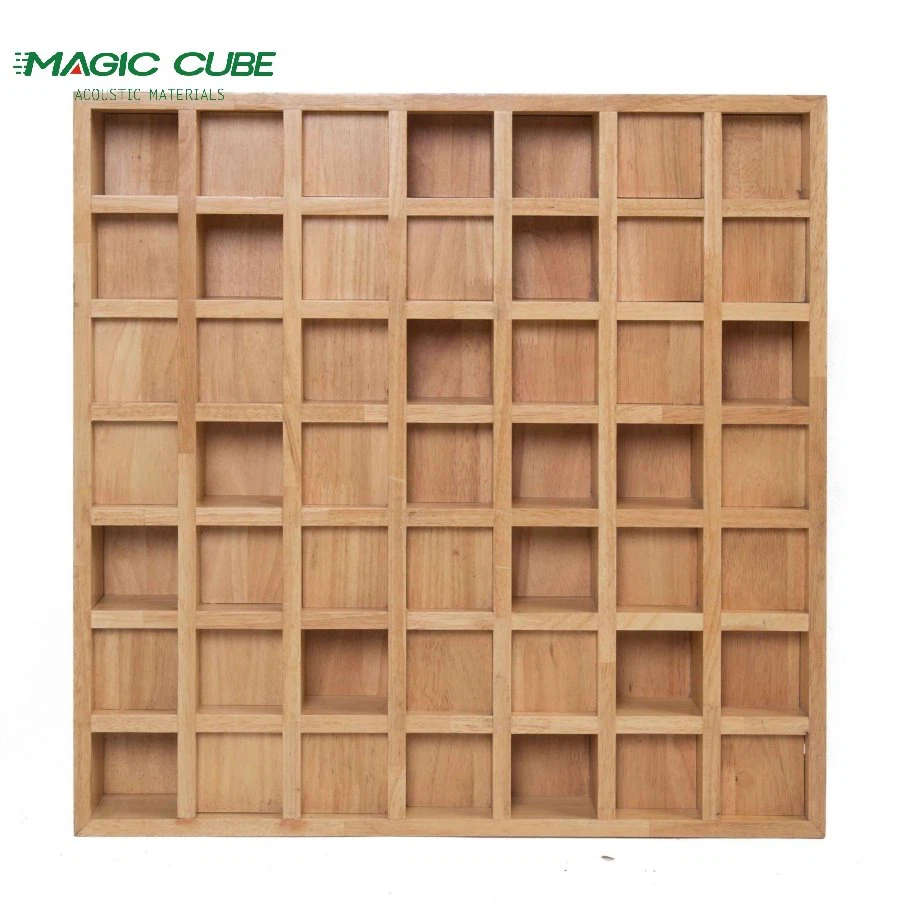
Now, let's talk about how we, as a Solid Wood Diffuser supplier, take the grain of the wood into account when manufacturing our products.
We carefully select the wood species based on their grain characteristics and acoustic properties. We source our wood from sustainable forests to ensure that we're using high - quality, environmentally friendly materials.
During the manufacturing process, we pay close attention to the orientation of the grain. We try to align the grain in a way that maximizes the diffusion performance of the diffuser. This might involve cutting the wood at specific angles or using different techniques to ensure that the grain is working in harmony with the sound waves.
We also conduct extensive testing on our diffusers to evaluate their performance. We use state - of - the - art acoustic testing equipment to measure how the diffusers scatter sound waves in different frequencies and environments. This allows us to fine - tune our manufacturing process and ensure that our products meet the highest standards of quality and performance.
In addition to the grain of the wood, there are other factors that can affect the diffusion of a solid wood diffuser. The shape and design of the diffuser, the thickness of the wood, and the overall size of the diffuser all play important roles.
For example, a 3D Sound Diffuser has a more complex shape compared to a traditional flat diffuser. This 3D design can enhance the diffusion of sound by creating multiple reflection and scattering points. The thickness of the wood can also impact the absorption and reflection of sound waves. Thicker wood can absorb more low - frequency sound, while thinner wood might be more effective at diffusing high - frequency sound.
If you're in the market for a Solid Wood Sound Diffuser, it's important to consider all of these factors. You want to choose a diffuser that is made from high - quality wood with the right grain characteristics, and that has a design that is suitable for your specific acoustic needs.
Whether you're a professional audio engineer, a musician, or just someone who wants to improve the sound quality in their home, our solid wood diffusers are a great choice. We offer a wide range of products in different sizes, shapes, and wood species to meet your unique requirements.
If you're interested in learning more about our Solid Wood Diffusers or if you have any questions about how the grain of the wood affects diffusion, please don't hesitate to reach out. We're always happy to help you find the perfect diffuser for your space.
In conclusion, the grain of the wood is a critical factor in the performance of a solid wood diffuser. It can affect the density, direction of sound wave travel, and overall diffusion capabilities of the diffuser. By understanding how the grain works and by carefully selecting and processing the wood, we can create high - quality solid wood diffusers that provide excellent acoustic performance.
References
- Acoustic Materials Handbook
- Wood Science and Technology textbooks
So, if you're looking to enhance the sound in your space, get in touch with us today to discuss your options for a Solid Wood Diffuser. We're here to make sure you get the best possible acoustic solution for your needs.