

As a supplier of acoustic diffusers, I've witnessed firsthand the profound impact these devices can have on the acoustic environment of a room. In this blog, we'll explore how acoustic diffusers affect the reverberation time of a room, delving into the science behind their operation and real - world applications.
Understanding Reverberation Time
Reverberation time is a crucial parameter in acoustics. It is defined as the time it takes for the sound pressure level in a room to decay by 60 decibels (dB) after the sound source has stopped. A long reverberation time can lead to a muddled, echo - filled sound, making it difficult to understand speech or enjoy music. On the other hand, a very short reverberation time can make a room sound dead and uninviting.
The ideal reverberation time varies depending on the room's function. For example, in a concert hall, a longer reverberation time (around 1.8 - 2.2 seconds) can enhance the richness and fullness of the music. In a recording studio, a shorter reverberation time (around 0.3 - 0.5 seconds) is preferred to ensure clear and accurate sound capture.
How Acoustic Diffusers Work
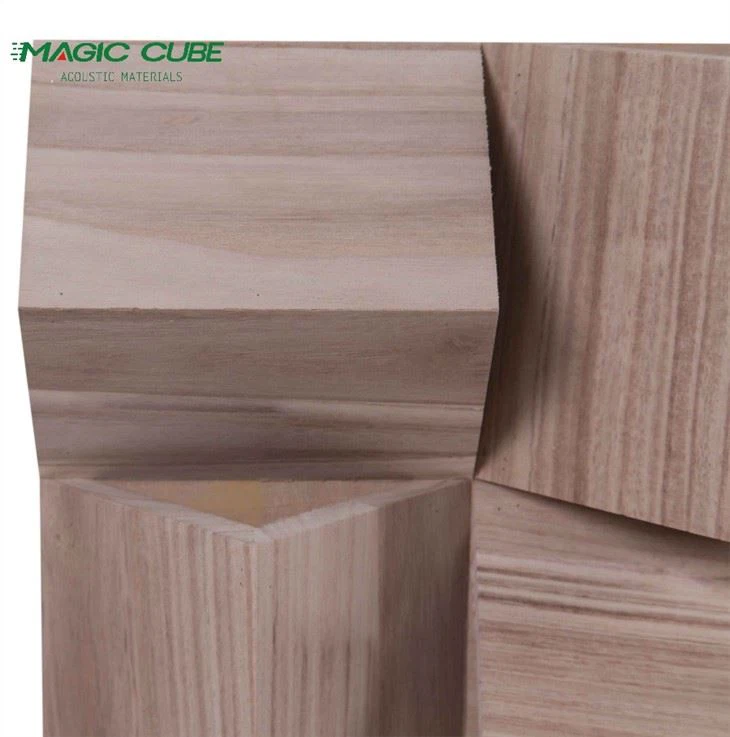
Acoustic diffusers are designed to scatter sound waves in a controlled manner. Unlike sound absorbers, which absorb sound energy, diffusers redistribute sound throughout the room. They work by creating a series of irregular surfaces that cause sound waves to reflect in multiple directions.
When a sound wave hits a diffuser, it is broken up into smaller wavelets that spread out in different directions. This scattering effect helps to reduce the intensity of direct reflections and create a more even distribution of sound energy in the room. As a result, the sound becomes more diffuse, and the listener experiences a more natural and balanced acoustic environment.

Impact on Reverberation Time
One of the primary ways acoustic diffusers affect reverberation time is by reducing the strength of early reflections. Early reflections are the first sound waves that reach the listener after being reflected off the walls, ceiling, or floor. If these reflections are too strong, they can interfere with the direct sound and cause a sense of echo.
By diffusing the early reflections, acoustic diffusers prevent them from combining in a way that creates a distinct echo. Instead, the sound is spread out over a longer period, which can effectively increase the perceived reverberation time without creating a harsh or muddled sound.
In some cases, acoustic diffusers can also help to balance the reverberation time across different frequencies. Different materials and designs of diffusers have different diffusion properties at various frequencies. For example, a Acoustic Wood Diffuser may be more effective at diffusing mid - to high - frequency sounds, while a Solid Wood Sound Diffuser can offer better diffusion for low - frequency sounds. By carefully selecting and placing diffusers, it is possible to achieve a more uniform reverberation time across the audible frequency range.
Real - World Applications
Concert Halls
In concert halls, acoustic diffusers play a vital role in creating a rich and immersive listening experience. By diffusing sound waves, they help to fill the hall with a more even distribution of sound, enhancing the clarity and fullness of the music. The diffused sound also allows the audience to perceive the spatial characteristics of the performance, making the experience more engaging.
Recording Studios
Recording studios require precise control over the acoustic environment. Acoustic diffusers are used to reduce unwanted reflections and create a more natural sound field. This helps to improve the quality of the recorded sound, as the microphones are less likely to pick up distorted or echo - filled signals. A Diffuser Sound Absorber can be particularly useful in studios, as it combines the functions of diffusion and absorption to achieve optimal acoustic conditions.
Home Theaters
In home theaters, acoustic diffusers can transform the viewing and listening experience. They help to create a more cinematic sound by reducing echoes and improving the overall sound quality. By diffusing sound waves, the diffusers make the room feel more spacious and the sound more immersive, allowing viewers to fully enjoy their favorite movies and TV shows.
Factors Affecting the Performance of Acoustic Diffusers
The effectiveness of acoustic diffusers in affecting reverberation time depends on several factors.
Design and Geometry
The design and geometry of the diffuser play a crucial role in its diffusion properties. Different types of diffusers, such as quadratic residue diffusers, Schroeder diffusers, and Helmholtz resonator diffusers, have different scattering patterns and frequency responses. The size, shape, and depth of the diffuser elements also affect how sound waves are scattered.
Placement
The placement of acoustic diffusers in a room is also important. They should be placed at strategic locations where they can effectively intercept and diffuse sound waves. For example, diffusers are often placed on the side walls and ceiling of a room to reduce early reflections and create a more even sound field.
Material
The material used to construct the diffuser can also impact its performance. Different materials have different acoustic properties, such as absorption and reflection coefficients. Wood, for example, is a popular material for acoustic diffusers due to its natural aesthetic and good acoustic properties.
Measuring the Impact on Reverberation Time
To measure the impact of acoustic diffusers on reverberation time, acoustic measurements are typically conducted before and after the installation of the diffusers. These measurements involve using a sound source and a microphone to record the sound decay in the room.
The reverberation time can be calculated using the Sabine formula or other more advanced methods. By comparing the reverberation times before and after the installation of the diffusers, it is possible to determine the effectiveness of the diffusers in altering the acoustic environment of the room.
Conclusion
Acoustic diffusers have a significant impact on the reverberation time of a room. By scattering sound waves and reducing the strength of early reflections, they can create a more even and natural acoustic environment. Whether in concert halls, recording studios, or home theaters, acoustic diffusers are essential tools for achieving optimal sound quality.
If you're interested in improving the acoustic environment of your space, consider incorporating acoustic diffusers into your design. As a supplier of high - quality acoustic diffusers, we offer a wide range of products, including Acoustic Wood Diffuser, Diffuser Sound Absorber, and Solid Wood Sound Diffuser. Contact us to discuss your specific needs and explore how our products can enhance the acoustics of your room.
References
- Beranek, Leo L. "Acoustics." American Institute of Physics, 1954.
- Kuttruff, Heinrich. "Room Acoustics." Spon Press, 2009.
- Vorländer, Michael. "Auralization: Fundamentals of Acoustics, Modelling, Simulation, Algorithms and Acoustic Virtual Reality." Springer, 2008.