

As an acoustic diffuser supplier, I often get asked if these nifty devices actually work in large rooms. It's a valid question, and one that I'm more than happy to dive into. So, let's cut to the chase and find out if acoustic diffusers are the real deal for big spaces.
First off, what exactly is an acoustic diffuser? Well, it's a device designed to scatter sound waves in a room. Unlike sound absorbers that soak up sound energy, diffusers spread it out evenly. This helps to reduce echoes, flutter echoes, and standing waves, creating a more balanced and natural sound environment.
Now, let's talk about large rooms. Big spaces come with their own set of acoustic challenges. With more volume to fill, sound waves can bounce around for longer, leading to excessive reverberation. This can make speech hard to understand and music lose its clarity. So, can acoustic diffusers help solve these problems?
The short answer is yes, acoustic diffusers can work wonders in large rooms. Here's why.
How Acoustic Diffusers Work in Large Rooms
In a large room, the main goal is to control the reflections of sound waves. When sound hits a flat, hard surface like a wall or ceiling, it bounces off at an angle equal to the angle of incidence. This can create hotspots and dead spots in the room, where the sound is either too loud or too quiet.
Acoustic diffusers break up these direct reflections. They have a series of fins, wells, or other geometric shapes on their surface. When sound waves hit the diffuser, they are scattered in multiple directions. This random scattering helps to even out the sound distribution in the room, reducing the intensity of any single reflection and eliminating those pesky hotspots and dead spots.
For example, in a large concert hall or auditorium, acoustic diffusers can be installed on the walls and ceiling. They help to distribute the sound from the stage evenly throughout the seating area, ensuring that every member of the audience gets a clear and balanced listening experience.
Types of Acoustic Diffusers for Large Rooms
There are several types of acoustic diffusers available, each with its own unique properties and benefits. Let's take a look at some popular options:

-
Qrd Sound Diffuser: The Qrd Sound Diffuser is a type of quadratic residue diffuser. It's designed to scatter sound waves over a wide range of frequencies. These diffusers are great for large rooms because they can handle the complex sound reflections that occur in big spaces. They're often used in recording studios, theaters, and large meeting rooms.
-
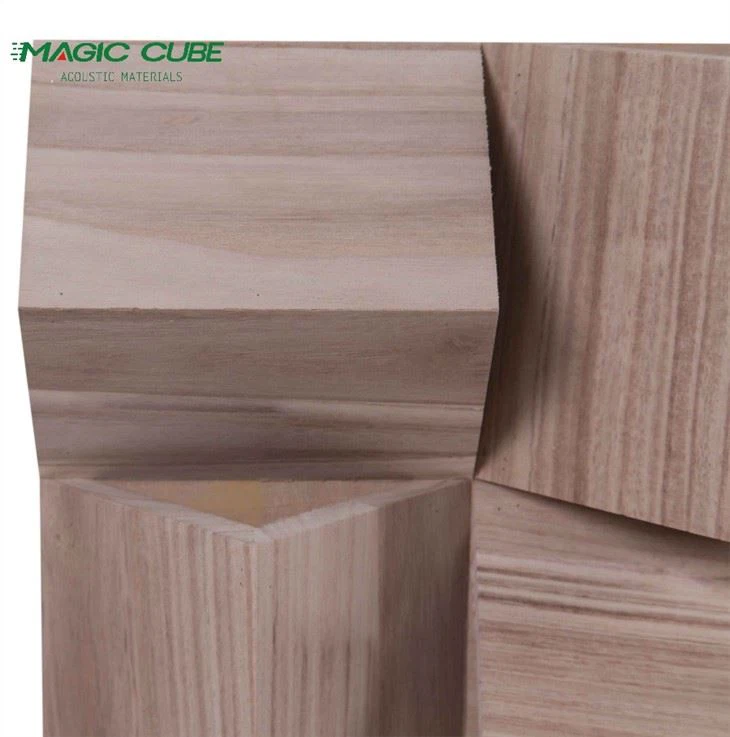
Solid Wood Diffuser: Solid Wood Diffuser not only provides excellent acoustic performance but also adds a touch of natural beauty to a room. Wood has a warm and inviting tone, and it can help to create a more pleasant listening environment. Solid wood diffusers are suitable for large rooms such as libraries, galleries, and high-end offices.
-
Wood Acoustic Diffuser Panel: Wood Acoustic Diffuser Panel are a popular choice for large rooms because they are relatively easy to install. They can be mounted on walls or ceilings, and they come in a variety of sizes and designs. These panels are effective at scattering sound waves and can help to improve the overall acoustics of a room.
-
Bass Trap Diffuser: In large rooms, low-frequency sound can be a problem. Bass waves tend to build up and create standing waves, which can make the sound muddy and boomy. Bass Trap Diffuser are designed to absorb and diffuse low-frequency sound. They can be placed in corners or along walls to help control the bass response in a room.
-
Diffuser Sound Absorber: Diffuser Sound Absorber combine the functions of a diffuser and an absorber. They scatter sound waves while also absorbing some of the sound energy. This can be useful in large rooms where you need to reduce both reflections and reverberation.
Factors to Consider When Using Acoustic Diffusers in Large Rooms
While acoustic diffusers can be very effective in large rooms, there are a few factors to consider to ensure optimal performance:
-
Placement: The placement of acoustic diffusers is crucial. They should be installed in areas where sound reflections are a problem, such as on the walls opposite the sound source or in the corners of the room. The height and spacing of the diffusers also need to be carefully considered to ensure even sound distribution.
-
Coverage: In a large room, you may need to install multiple diffusers to achieve the desired effect. The amount of coverage depends on the size and shape of the room, as well as the specific acoustic requirements. It's important to calculate the appropriate number and size of diffusers based on these factors.
-
Frequency Range: Different types of diffusers are designed to work at different frequency ranges. It's important to choose diffusers that are suitable for the frequency range of the sound you want to control. For example, if you're dealing with mainly speech, you may need diffusers that work well in the mid-frequency range.
Real-World Examples of Acoustic Diffusers in Large Rooms
To give you a better idea of how acoustic diffusers work in large rooms, let's take a look at some real-world examples:
-
Recording Studios: In a large recording studio, acoustic diffusers are used to create a balanced and natural sound environment. They help to reduce reflections and reverberation, allowing the recording engineer to capture clean and accurate audio. For example, diffusers can be installed on the walls and ceiling to scatter sound waves from the speakers and instruments, preventing unwanted reflections from interfering with the recording.
-
Concert Halls: Concert halls are designed to provide the best possible listening experience for the audience. Acoustic diffusers play a crucial role in achieving this. They help to distribute the sound from the stage evenly throughout the hall, ensuring that every member of the audience can hear the music clearly. Diffusers can be installed on the walls, ceiling, and even the balcony fronts to create a more immersive and engaging listening environment.
-
Conference Rooms: In large conference rooms, acoustic diffusers can help to improve speech intelligibility. They reduce echoes and reflections, making it easier for people to understand what is being said. This is especially important in a professional setting where effective communication is key.
Conclusion
So, do acoustic diffusers work in large rooms? Absolutely! They are a powerful tool for controlling sound reflections and improving the acoustics of big spaces. Whether you're a recording studio owner, a concert hall manager, or a business looking to improve the sound quality in your conference room, acoustic diffusers can make a significant difference.
If you're interested in purchasing acoustic diffusers for your large room, I'd love to have a chat with you. We can discuss your specific needs and find the right solution for your space. Don't hesitate to reach out and start the conversation!
References
- Beranek, Leo L. "Acoustics." American Institute of Physics, 1986.
- Cox, Trevor, and Peter D'Antonio. "Acoustic Absorbers and Diffusers: Theory, Design and Application." Taylor & Francis, 2004.