

In the world of acoustics, the pursuit of perfect sound quality is a never - ending journey. Concert halls, as the premier venues for musical performances, demand the highest standards of acoustic treatment. One of the innovative solutions that has been gaining traction in recent years is the use of 3D sound diffusers. As a supplier of 3D sound diffusers, I am excited to explore whether these cutting - edge devices can truly make a difference in a concert hall environment.
Understanding 3D Sound Diffusers
Before delving into their application in concert halls, let's first understand what 3D sound diffusers are. Sound diffusers are devices designed to scatter sound waves in a non - specular manner. Unlike sound absorbers that absorb sound energy, diffusers spread the sound evenly throughout the space.

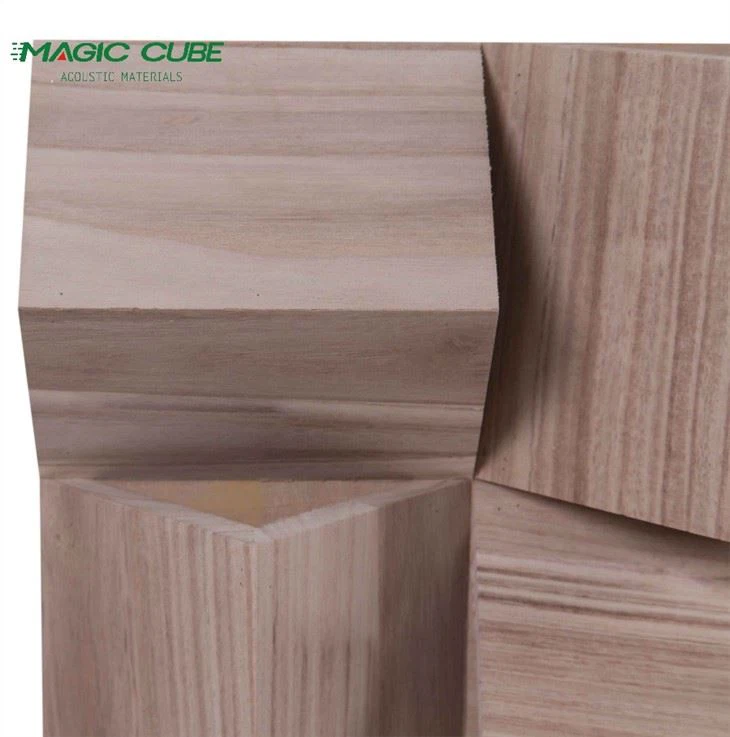
3D sound diffusers take this concept a step further. They are three - dimensional structures that interact with sound waves in multiple directions, providing a more comprehensive diffusion effect compared to their 2D counterparts. These diffusers can be made from various materials, such as wood, plastic, or composite materials, and are available in different shapes and sizes to suit different acoustic requirements.
The Acoustic Requirements of Concert Halls
Concert halls have very specific acoustic requirements. The primary goal is to create an environment where the music can be heard clearly and beautifully from every seat in the house. This means achieving a balance between reverberation time, early reflections, and diffusion.
Reverberation time is the time it takes for a sound to decay by 60 decibels after the source has stopped. Different types of music require different reverberation times. For example, classical orchestral music usually sounds best with a reverberation time between 1.8 and 2.2 seconds, while chamber music may require a shorter reverberation time of around 1.5 seconds.
Early reflections are the first sound waves that reach the listener after the direct sound. These reflections can enhance the sense of spaciousness and clarity of the music if they arrive within a certain time window.
Diffusion is crucial for creating a uniform sound field throughout the concert hall. A well - diffused sound field ensures that the music sounds the same from all seats, reducing the presence of dead spots or areas of excessive reflection.
Advantages of Using 3D Sound Diffusers in Concert Halls
- Enhanced Sound Diffusion:
3D sound diffusers can provide superior diffusion compared to traditional 2D diffusers. Their three - dimensional structure allows them to scatter sound waves in multiple directions, creating a more uniform and spacious sound field. This means that the audience can experience a more immersive and consistent listening experience, regardless of their seating position. - Improved Acoustic Balance:
By evenly distributing sound energy throughout the concert hall, 3D sound diffusers can help to balance the reverberation time and early reflections. They can reduce the formation of standing waves and flutter echoes, which can distort the sound and degrade the listening experience. - Aesthetic Appeal:
In addition to their acoustic benefits, 3D sound diffusers can also add an aesthetic touch to the concert hall. They come in a variety of shapes and designs, which can be integrated into the architectural style of the venue. For example, some Wood Acoustic Diffuser Panel can be crafted to look like elegant wood panels, enhancing the overall visual appeal of the concert hall. - Customizability:
3D sound diffusers can be customized to meet the specific acoustic requirements of a concert hall. Manufacturers can adjust the size, shape, and material of the diffusers based on factors such as the size of the hall, the type of music performed, and the desired acoustic parameters. This allows for a tailored acoustic solution for each unique concert hall.
Challenges and Considerations
While 3D sound diffusers offer many advantages, there are also some challenges and considerations that need to be addressed when using them in concert halls.
- Cost:
The cost of 3D sound diffusers can be relatively high compared to traditional acoustic treatments. This is due to the complexity of their design and manufacturing process. However, the long - term benefits of improved acoustic quality may outweigh the initial investment. - Installation:
Proper installation of 3D sound diffusers is crucial for achieving optimal acoustic performance. They need to be placed at the right locations and orientations to ensure effective sound diffusion. This may require the expertise of an acoustic engineer or consultant. - Compatibility with Other Acoustic Treatments:
Concert halls often use a combination of sound absorbers and diffusers to achieve the desired acoustic balance. It is important to ensure that the 3D sound diffusers are compatible with other acoustic treatments in the hall. For example, the Diffuser Sound Absorber should work in harmony with the overall acoustic design to avoid any negative interactions. - Maintenance:
Like any other acoustic device, 3D sound diffusers require regular maintenance to ensure their long - term performance. This may include cleaning, inspection for damage, and occasional repairs.
Case Studies
There have been several successful applications of 3D sound diffusers in concert halls around the world. For example, in a recent renovation of a well - known concert hall, Qrd Sound Diffuser were installed on the side walls and ceiling. The result was a significant improvement in the sound quality, with a more uniform sound field and reduced acoustic anomalies. The audience reported a more immersive and enjoyable listening experience, and the musicians also noted that the acoustics were more supportive of their performances.
Conclusion
In conclusion, 3D sound diffusers have great potential for use in concert halls. They can enhance sound diffusion, improve acoustic balance, and add aesthetic value to the venue. While there are some challenges and considerations, such as cost, installation, and maintenance, the benefits of using 3D sound diffusers in a concert hall environment are substantial.
If you are involved in the design, renovation, or management of a concert hall and are interested in exploring the use of 3D sound diffusers, I encourage you to contact us. Our team of experts can provide you with detailed information, customized solutions, and professional advice to help you achieve the best acoustic performance for your venue.
References
- Beranek, Leo L. "Concert Halls and Opera Houses: Music, Acoustics, and Architecture." Springer - Verlag, 1996.
- D'Antonio, Peter. "Acoustic Absorbers and Diffusers: Theory, Design, and Application." Taylor & Francis, 2006.
- Cox, Trevor J., and Peter D'Antonio. "Acoustic Absorbers and Diffusers: Theory, Design, and Application." Spon Press, 2004.