

If you've ever been jolted awake by your neighbor's late-night TV, cringed at the echo bouncing off your apartment's bare walls, or struggled to focus while your roommate blasts podcasts in the next room, you know how much unplanned noise can wreck your daily life. As someone who's spent years working with fabric acoustic panels-helping homeowners and contractors pick the right products for their spaces-I get it: residential sound issues aren't just annoying, they can mess with sleep, work productivity, and even family time. A lot of people I talk to still think acoustic panels are only for studios or fancy office conference rooms, but that couldn't be further from the truth. Today, I'm breaking down why fabric acoustic panels are a game-changer for homes, and how they can turn cluttered, echoey spaces into calm, functional sanctuaries.
First, let's get one thing straight: not all acoustic treatments are created equal. A few years back, a customer emailed me saying he'd bought cheap foam panels from a big-box store to fix his home office echo, and they looked like they belonged in a college dorm bathroom-total eyesore. That's where fabric acoustic panels step in, because they balance two huge wins: actual noise reduction and style that fits with your home's vibe. Let's start with the most practical benefit: they actually work to cut down unwanted sound, not just make your walls look different.
Unwanted residential noise usually falls into two categories: airborne noise (think voices, TV, doorbells) and structural noise (footsteps from upstairs, a washing machine vibrating through the floor). Fabric acoustic panels are designed to target both, thanks to the core material inside. Most quality options use fibreglass acoustic panels-yes, fibreglass isn't just for insulation! The tiny, interwoven glass fibers trap sound waves as they pass through the panel, converting that noise energy into a tiny bit of heat (science stuff, right?). That means less noise bouncing around your walls, ceilings, or floors, and more of it absorbed before it gets to your ears. If you've ever stood in an empty hallway or a room with all hard surfaces (tile, wood, concrete), you know how loud and echoey it feels-this is called reverberation, and it's one of the biggest culprits of residential noise chaos.
I remember a client who lived in a 1920s row house with thin shared walls. His kid's tantrums and his partner's morning podcast were always bleeding through to the next unit, and he got a couple of passive-aggressive notes from the neighbors. We installed fabric-covered wall panels on his living room and bedroom walls, and within a month, he told me the tantrums no longer sounded like they were happening right in his own bed, and he could take calls in his home office without his partner overhearing every word. That's the kind of real, day-to-day difference these panels make.
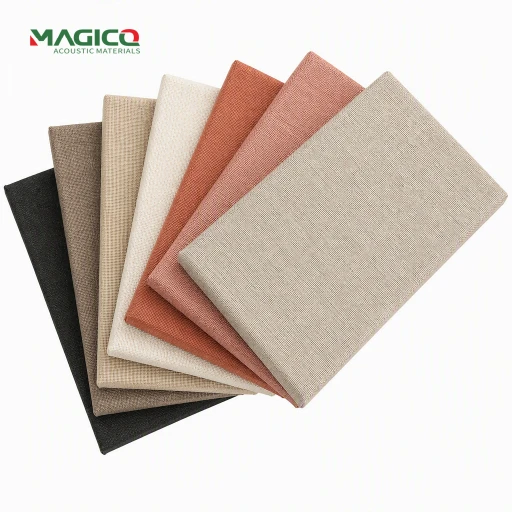
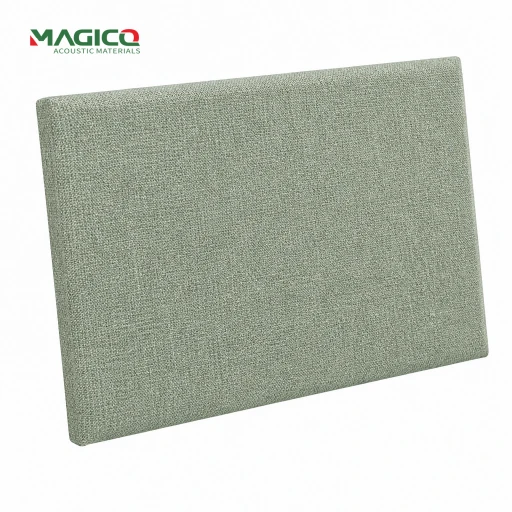
Another big plus: style that doesn't scream "acoustic treatment." So many noise solutions are bulky, plain, or only come in boring neutral colors that stick out like a sore thumb. Fabric acoustic panels are wrapped in a range of high-quality fabrics-from soft linens and woven cottons to durable performance fabrics that hold up well to kid spills or pet scratches. You can pick a panel that matches your living room sofa, matches your bedroom accent wall, or even adds a subtle pop of color to a home office. That's why we have different lines for different spaces: if you're looking for larger panels for big walls, check out our fabric covered wall panels; if you need to cover a dropped ceiling or a smaller space, our fabric wrapped acoustic tiles fit perfectly. For targeted spots like above a desk or a home theater, our fabric wrapped sound panels are the way to go. No more hiding ugly panels behind curtains or leaving them in a closet-these are designed to be part of your interior decor.
Durability is another thing I get asked about a lot. Homeowners worry about fabric panels getting stained, torn, or worn out over time, especially if they have kids or pets. The good news is most of our acoustic fabric material is stain-resistant and easy to clean-just a quick wipe with a damp cloth if you spill coffee or juice, no fancy cleaners needed. The fibreglass core is also moisture-resistant, so it works great in bathrooms or basements where humidity is an issue, as long as it's installed correctly (we always give installation tips to make that easy, too). I've had customers keep their panels for over 10 years and they still look like new-way better than cheap foam that crumbles after a couple of years.
Wait, let's talk about installation, because that's a big pain point for many homeowners. A lot of acoustic treatments require professional installation, which adds to the cost and takes extra time. Fabric acoustic panels are lightweight and most come with pre-drilled holes or hanging hardware, so even a beginner DIYer can install them in a weekend. You don't need to be a handyman-just measure the space, mark where you want the panels, and hang them up. That's perfect for renters? Wait, no, a lot of renters can't drill holes in walls, but some panels come with adhesive strips that are strong enough for non-damaging installation, so you can take them with you when you move. That's a huge win for people who don't own their homes.
But don't just take my word for it-let's get a bit scientific to back this up. The Noise Reduction Coefficient (NRC) is a standard rating that measures how much sound a material absorbs, on a scale from 0 (no absorption, like a concrete wall) to 1 (perfect absorption). Quality fabric acoustic panels have an NRC of 0.7 to 0.9, which means they absorb 70 to 90 percent of sound that hits them. That's way higher than most drywall (which has an NRC around 0.05) or even regular fabric curtains (which are around 0.2). So you're not just guessing-these panels actually have the ratings to prove they work.
I also have to mention something I see a lot of people get wrong: acoustic panels aren't just for noisy homes. Even if you live in a quiet neighborhood, they can improve your everyday comfort. If you work from home, a home office with echo can make it hard to focus on video calls, and your voice might sound muffled to clients or teammates. If you love hosting friends, a dining room or living room with echo can make conversations hard to follow, and everyone will be yelling over each other just to be heard. Fabric acoustic panels fix that by taming echo, making rooms feel warmer and more intimate, not just quieter. I had a customer who used panels in her home library-she loved reading in there, but the echo made it feel cold and impersonal. After installing the panels, she said it felt like a cozy little nook she never wanted to leave.
Now, let's address a common misconception: "Do acoustic panels block sound or just absorb it?" This is a big one, and it's important to clarify. Soundproofing (blocking sound from getting through walls) and acoustic absorption (reducing echo and reverberation) are two different things, and fabric acoustic panels do a mix of both. They won't turn your shared wall into a concrete barrier that completely stops noise, but they will reduce the amount of sound that passes through and bounces around. For example, in that row house I mentioned earlier, the panels cut the noise between units by about 30 to 40 percent-enough that the neighbor's TV no longer keeps his client up at night, and the client's kid's playtime no longer bothers the neighbor. If you're looking for full soundproofing, you'd combine panels with other solutions like mass-loaded vinyl, but fabric acoustic panels are the most affordable, easiest-to-install fix for everyday residential noise issues.
Let's also talk about value. A 4x2 foot fabric acoustic panel costs between $50 and $150, depending on the fabric and size, which is way cheaper than renovating walls or floors to fix noise issues. And since they look good, you don't have to spend extra money on decor to cover them-they work double duty as noise solutions and style pieces. Plus, since they're durable, you don't have to replace them every few years, so they're a long-term investment in your home's comfort.
As someone who sells these panels, I've helped so many people go from frustrated with noise to loving their homes again. I've talked to college students in small apartments, parents of young kids, retirees living in tight neighborhoods, and remote workers who need quiet to get their jobs done. Every time, the feedback is the same: these panels don't just fix a problem, they make their homes feel like a sanctuary again. If you've been dealing with unwanted noise in your home and tired of ugly, temporary fixes, give fabric acoustic panels a shot.
If you want to browse our range of options, you can check out our fabric wrapped acoustic tiles for smaller spaces, or fabric covered wall panels for larger areas. Our fabric wrapped sound panels are perfect for targeted spots like home theaters or home offices, and if you want to learn more about the materials we use, take a look at our acoustic fabric material page to see the different styles we offer. We also have fibreglass acoustic panels for those who want a core material known for its long-lasting sound absorption.
If you're ready to talk about your specific needs-whether you need panels for a bedroom, home office, living room, or any other space-reach out to our team to start a conversation about the best solution for your home.
References:
- Beranek, L. L., & Ver, I. L. (1992). Noise and Vibration Control Engineering: Principles and Applications. John Wiley & Sons.
- Acoustic Society of America. (2021). "Sound Absorption and Noise Control in Residential Environments." Journal of the Acoustical Society of America, 150(4), 2897–2912.
- National Association of Home Builders. (2020). "Residential Sound Control: Best Practices for Multifamily and Single-Family Homes." NAHB Research Center.
- ASTM International. (2019). Standard Test Method for Sound Absorption and Sound Absorption Coefficients by the Reverberation Room Method (ASTM C423-19).
We offer OEM and ODM product customization services, providing a one-stop acoustic solution. If you have any acoustic requirements, please contact us for technical support, product catalog, detailed product quotations, and free sample provision.
Our address
China Guang dong Room 306, Building D, No. 61, Zhuji Road
Phone Number/whatsapp
18127974693
info@mq-acoustics.com
