
Frequently Asked Questions About Soundproof Rubber Matting for Commercial Flooring Projects
Introduction
Commercial building projects including multi-family apartments, healthcare facilities, schools, hotels and office buildings frequently require reliable floor noise control. Soundproof rubber matting is widely specified as floating floor underlayment to block impact sound transmission through concrete slabs. As more architects, contractors and distributors search for trusted acoustic matting for floors, many questions arise around performance, installation, compliance and material selection. Below we answer the most frequent technical and commercial FAQs for acoustic rubber and soundproof floor mat for commercial flooring projects.
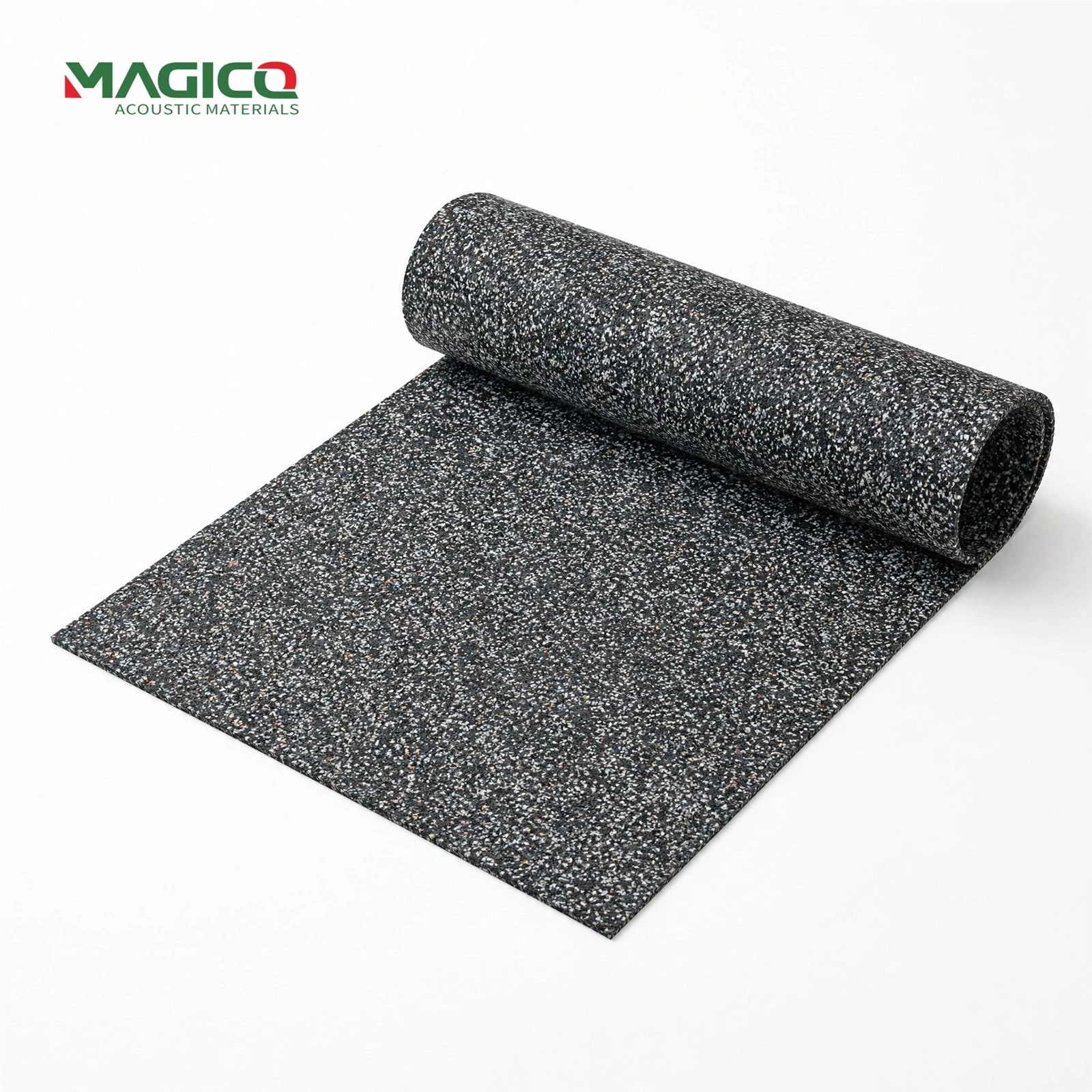
01. What is the difference between sound absorption and impact sound insulation for acoustic rubber matting?
Many buyers confuse these two acoustic concepts. Soundproof rubber matting is engineered primarily for impact sound isolation. It decouples the finished floor from the concrete substrate to reduce footsteps, furniture drag, dropped objects and equipment vibration transferring downwards through the slab. It does not absorb airborne sound like speech or music in the room. If your project requires both, combine acoustic matting for floors with wall or ceiling acoustic panels as a full acoustic system.
02. Why fire‑rated fiberglass panels reduce project risk for contractors
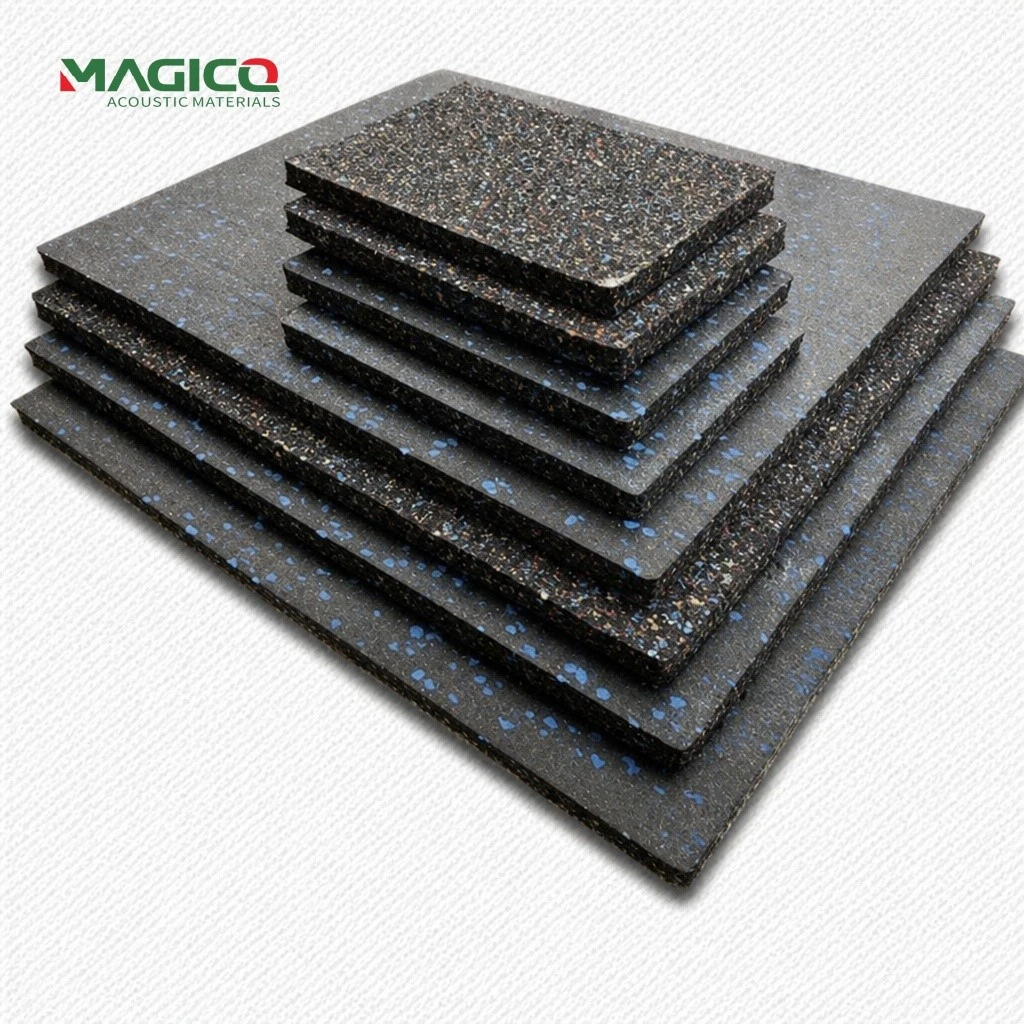
For North America projects, verify IIC rating tested per ASTM E492. European projects require ΔLw value tested to EN ISO 140-8. Our acoustic rubber matting delivers stable impact sound reduction, with performance linked directly to thickness and density. Standard options range from 3mm up to 12mm. Thicker high-density soundproof floor mat achieves higher ΔLw and IIC ratings to meet local commercial building codes. Always request full test reports before specification.
03.Combine fire safety with acoustic and sustainability performance
Our acoustic rubber matting works as underlay under most commercial finished floor coverings, including ceramic tile, luxury vinyl SPC, engineered hardwood and commercial carpet. For tile installations, proper floating floor construction and cement screed protection are critical to avoid point load damage. We supply technical installation drawings for contractors to follow, ensuring acoustic matting for floors maintains rated acoustic performance after installation.
04. Does soundproof rubber matting contain harmful VOCs or strong odour?
Our commercial grade soundproof rubber matting uses low-VOC recycled rubber crumb with controlled emission levels. It passes SGS and REACH testing, suitable for sensitive spaces including hospitals, schools and elderly care centres. Cheap low-grade rubber underlay often carries strong tyre odour and high volatile compounds. Our premium acoustic rubber matting minimises odour, making it compliant for LEED green building credits.
05. What about compression creep and long-term durability?
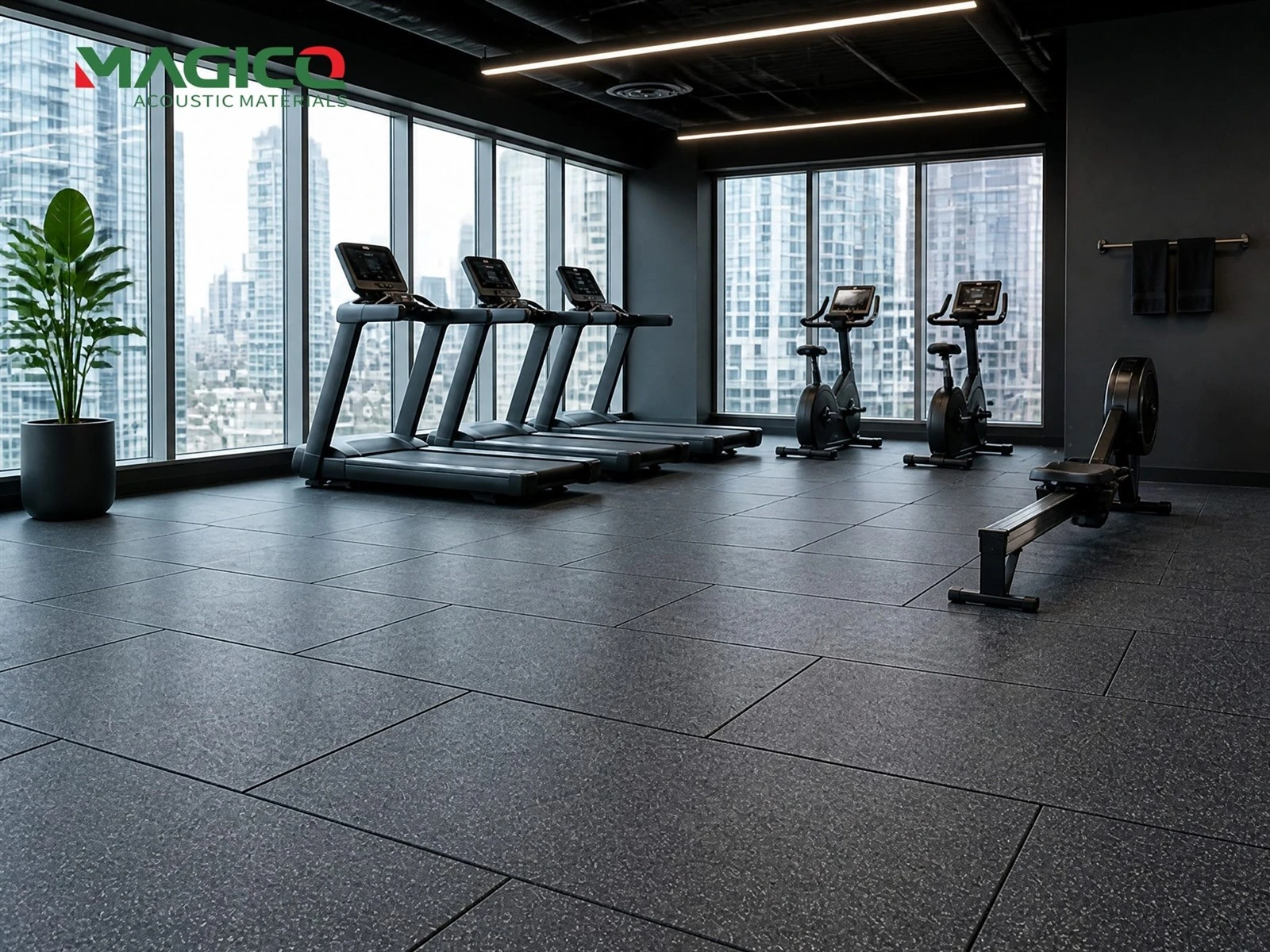
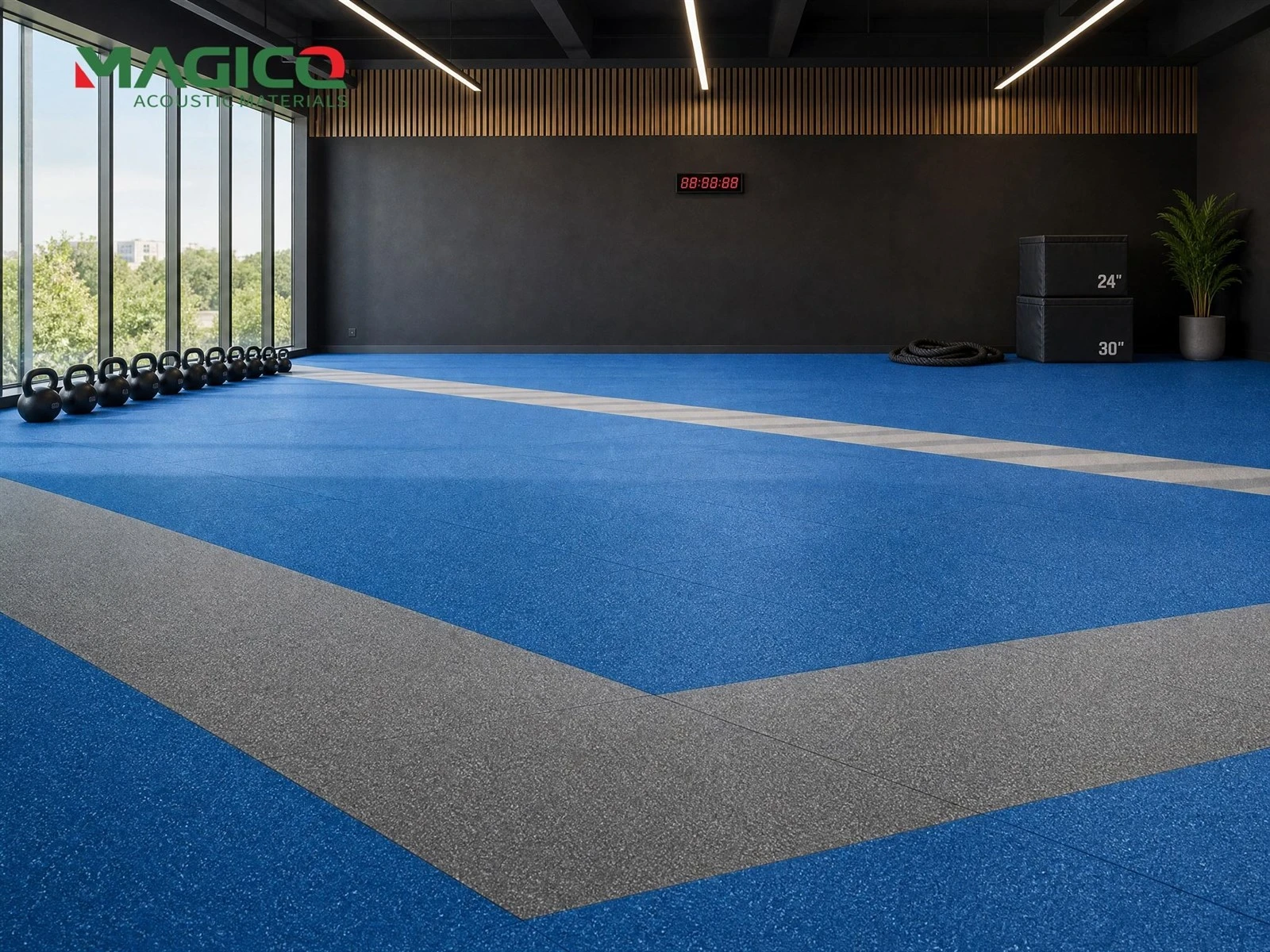
This is one of the top concerns for specifiers. Poor-quality acoustic matting for floors will creep under constant load, losing thickness and acoustic performance over years. Our acoustic rubber formulation is engineered for low compression set. It retains its thickness and vibration isolation performance under long-term static loads in multi-story commercial buildings. We provide long-term durability data for project tender documents.
06. What fire certifications are available for acoustic rubber matting?
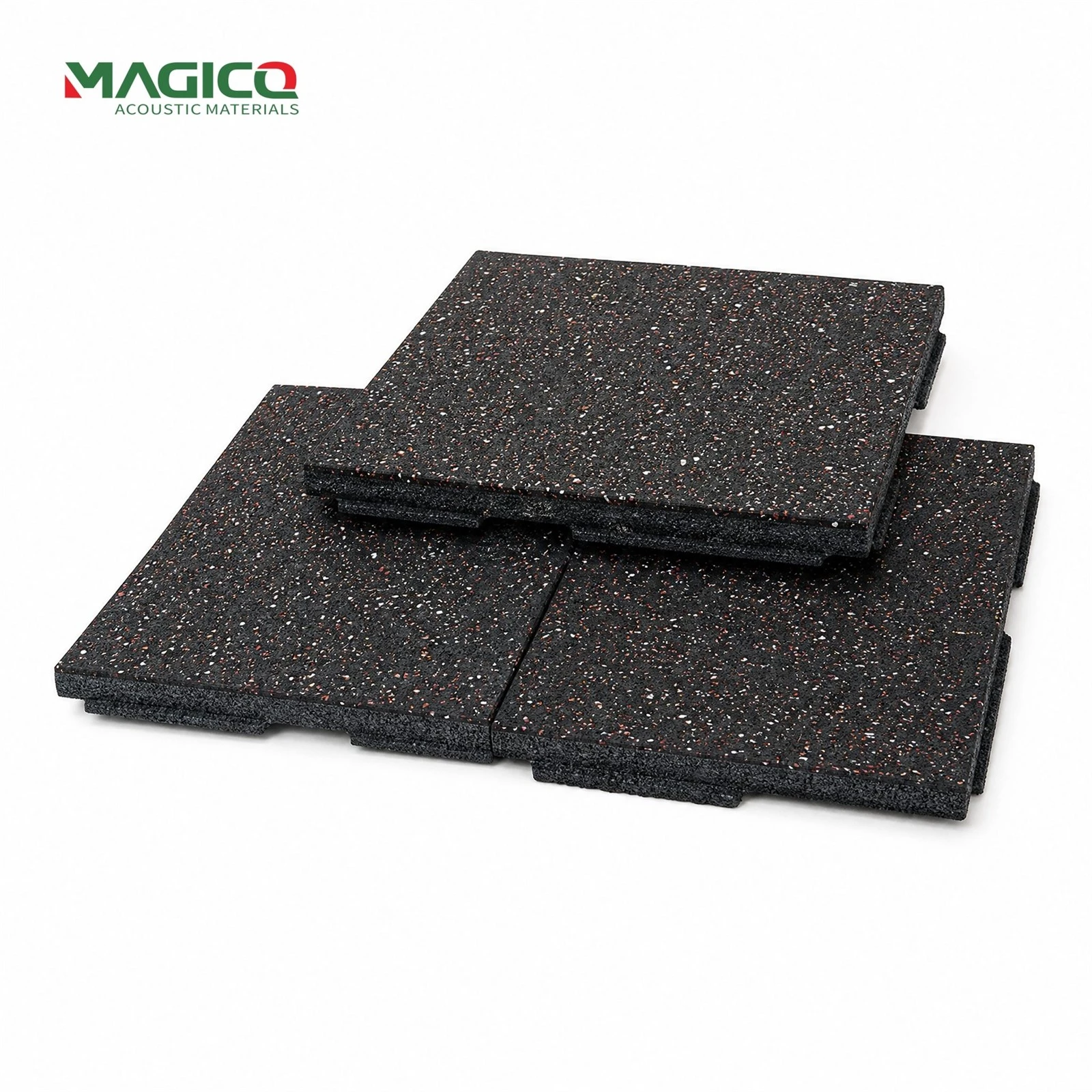
We supply fire-rated options for commercial buildings. Depending on target markets, our acoustic rubber matting can meet Euroclass E / B1 or ASTM fire classification, satisfying fire code requirements for schools, healthcare and hospitality commercial flooring. Fire certificates can be included within your project documentation package.
07.Which commercial projects use acoustic matting for floors most often?
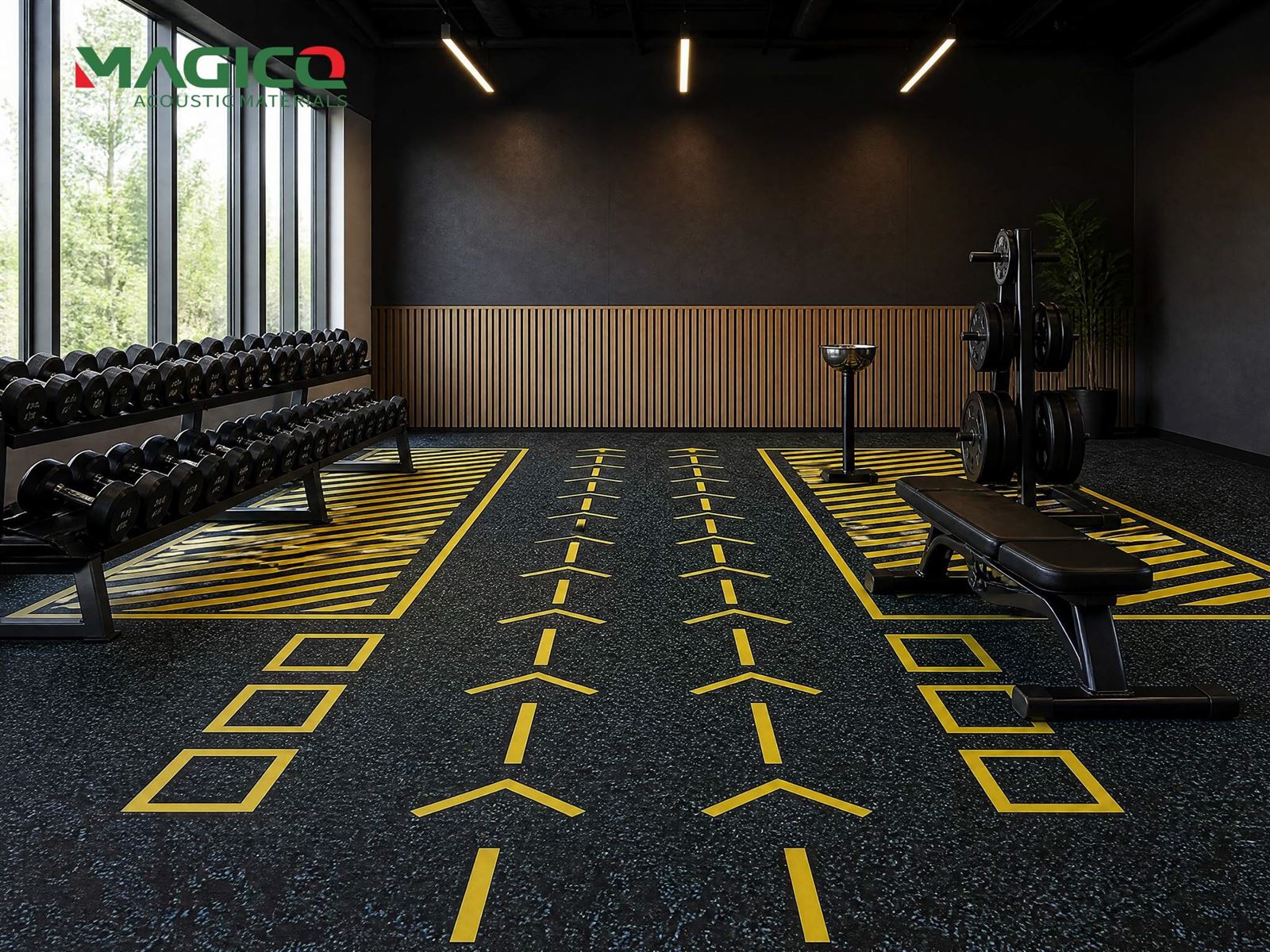
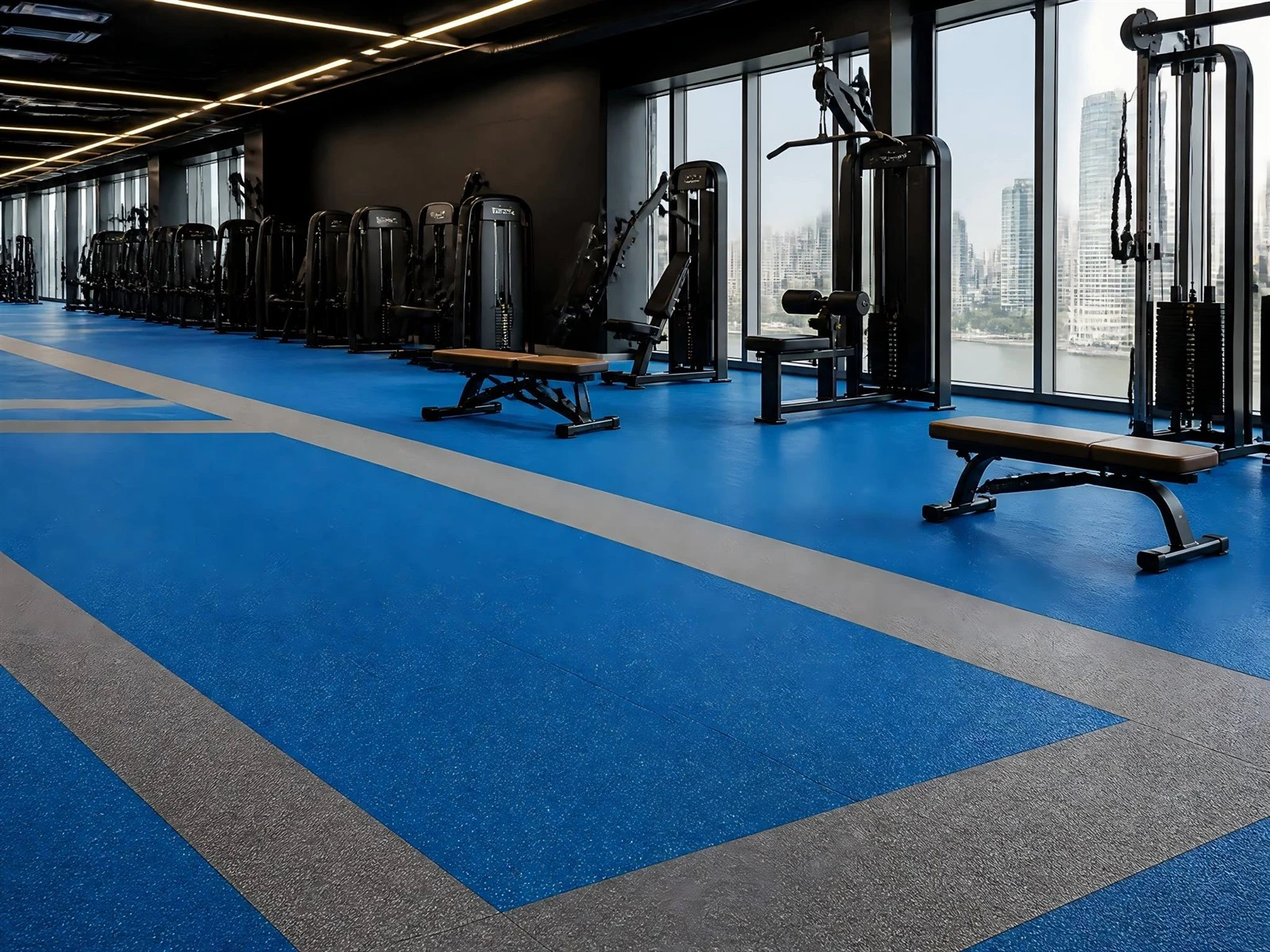
multi-family residential apartments, hotel guest rooms, hospital wards, university classrooms, open-plan offices, gym floating floors and mechanical room equipment bases. When upper floors generate heavy impact noise, soundproof rubber matting is the preferred underlay choice to reduce complaints and meet mandatory building acoustic codes.
Contact us
Choosing the right soundproof rubber matting requires checking acoustic test reports, compression performance, VOC emissions and fire ratings, not just price. Our team provides full technical datasheets, installation guides and certified test results for acoustic rubber matting and acoustic matting for floors. Contact us to discuss your commercial flooring project requirements and get samples of acoustic rubber and soundproof floor mat.