

Hey there! As a supplier of wood wool boards, I often get asked about their acoustic performance in a room. So, I thought I'd take a bit of time to dig into this topic and share what I've learned.
First off, let's talk about what wood wool boards are. They're made from long, thin strands of wood that are glued together to form panels. These boards have been around for a while, and they're known for being eco - friendly, lightweight, and having some pretty cool acoustic properties.
How Do Wood Wool Boards Work for Sound?
The way wood wool boards deal with sound has a lot to do with their structure. The long wood fibers create a porous environment inside the board. When sound waves hit the board, they enter these pores. As the sound waves travel through the tiny spaces between the wood fibers, they lose energy. This energy loss is what causes the sound to be absorbed, rather than just bouncing off the surface like it would on a hard, non - porous material.
Think about it like this: when you clap your hands in an empty room with bare walls, the sound echoes a lot. That's because the sound waves are hitting the hard walls and bouncing right back. But if you line those walls with wood wool boards, the sound waves get trapped in the pores of the boards, and the echoes are reduced.
Absorption Performance
The sound absorption performance of wood wool boards is usually measured by something called the Noise Reduction Coefficient (NRC). The NRC is a number between 0 and 1 that tells you how well a material absorbs sound. A value of 0 means the material reflects all sound, while a value of 1 means it absorbs all sound.
Wood wool boards typically have an NRC ranging from 0.6 to 0.9, depending on factors like the thickness of the board, the density of the wood fibers, and the way the board is installed. Thicker boards generally have better absorption performance because they offer more space for the sound waves to travel through the pores and lose energy.
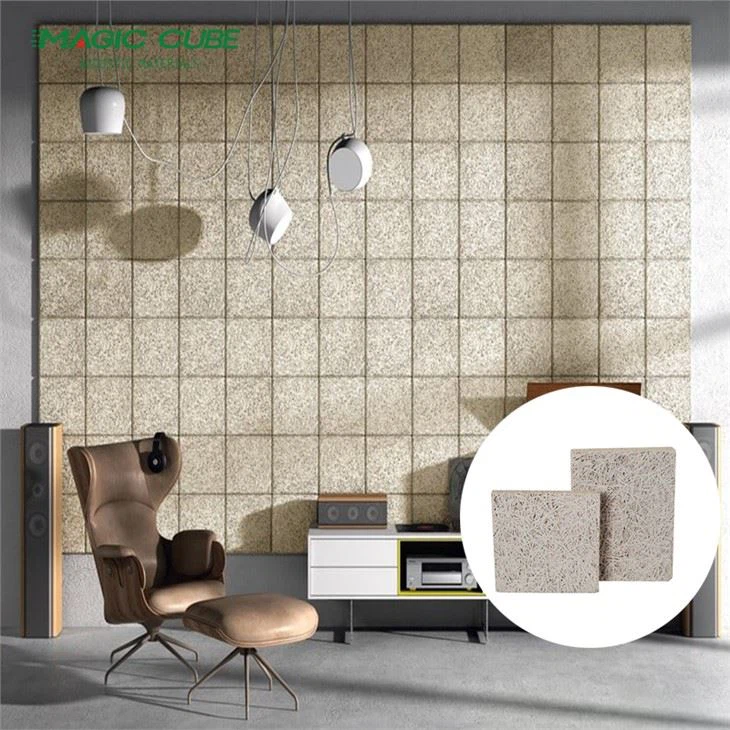
For example, in a home theater room, you want to absorb as much sound as possible to create a more immersive experience. Wood wool boards with a higher NRC can effectively reduce echoes and background noise. They can make the dialogue in a movie clearer and the music more distinct.
Sound Insulation
In addition to sound absorption, wood wool boards can also provide some level of sound insulation. Sound insulation is about preventing sound from passing through a wall or ceiling. When it comes to wood wool boards, their porous structure helps to break up the sound waves as they try to pass through the board.
Let's say you have an office next to a noisy corridor. Installing wood wool boards on the office wall can help to reduce the amount of noise that comes in from the corridor. The sound waves from the corridor have to pass through the countless pores in the wood wool board, and this process weakens the sound waves before they reach the inside of the office.
However, it's important to note that while wood wool boards offer some sound insulation, they may not be as effective as dedicated soundproofing materials in extremely noisy environments. But for most residential and commercial spaces, they can make a noticeable difference.
Applications in Different Rooms
Living Rooms
In a living room, wood wool boards can be used on the ceiling or one of the walls. They can create a more comfortable and relaxing atmosphere by reducing echoes. For instance, if you're having a party with music and conversations, the wood wool boards will prevent the sounds from bouncing around too much, making it easier to talk and enjoy the music. You can check out Wood Wool Ceiling Borads for some great options for your living room ceiling.
Workspaces
In an office or a co - working space, noise can be a real distraction. Wood wool boards can be installed on the partitions or the walls to absorb the sound of typing, phone calls, and conversations. This helps to create a more focused and productive environment. Wood Wool Ceiling Tiles are a great choice for office ceilings as they can be easily installed and replaced if needed.

Recording Studios
Recording studios require high - quality acoustic treatment. Wood wool boards can play a crucial role in creating a well - balanced sound environment. They can absorb unwanted reflections and echoes, allowing for a cleaner recording. Soundproof Wool Wool Panels are often used in recording studios to achieve the desired sound quality.
Factors Affecting Acoustic Performance
There are a few factors that can affect how well wood wool boards perform acoustically. One of them is the installation method. If the boards are not installed properly, there may be gaps between the boards. These gaps can allow sound to pass through without being absorbed, reducing the overall acoustic performance.
The moisture content in the environment also matters. Wood is a natural material, and if it gets too wet, it can start to lose its shape and the acoustic properties may change. So, it's important to use wood wool boards in environments where the humidity levels are kept in check.
Conclusion
Overall, wood wool boards are a great option when it comes to improving the acoustic performance of a room. They offer good sound absorption and some level of sound insulation. Whether you're looking to create a cozy living room, a productive workspace, or a professional recording studio, wood wool boards can make a big difference.
If you're interested in purchasing wood wool boards for your project, I'd be more than happy to talk to you about your specific needs. Just reach out, and we can have a chat about how to get the best acoustic results for your space.
References
- Olthuis, S. (2018). Acoustic Performance of Natural Fibre Materials.
- Sabine, W. C. (1900). Collected Papers on Acoustics.